Empowering students with cross-cultural understanding, critical thinking, and real-world problem-solving skills to navigate our interconnected world.
Getting started
Delve into different key frameworks and texts for thinking about global education.
Assessment Tools
Discover tools to measure and enhance global education in your school and classroom.
DIGITAL LEARNING
Explore different tools for bringing the world into your classroom, engaging with others and exploring media and digital literacy with your students.
Global education is a way of thinking about teaching and learning that highlights the world’s interconnectedness. It fosters inquiry, builds empathy as students examine diverse perspectives and encourages them to begin to take action to confront local and global challenges.
Global competence is the set of knowledge, skills and attitudes that students develop through engaging with curricula that emphasize global education.

Oxfam's Global Citizenship Guides for both schools and educators provide a comprehensive look at what global education is and what it is not. I especially like the detailed age breakdowns for knowledge, skills, and values and attitudes, as well as the suggestions for how to incorporate global education into different disciplines.
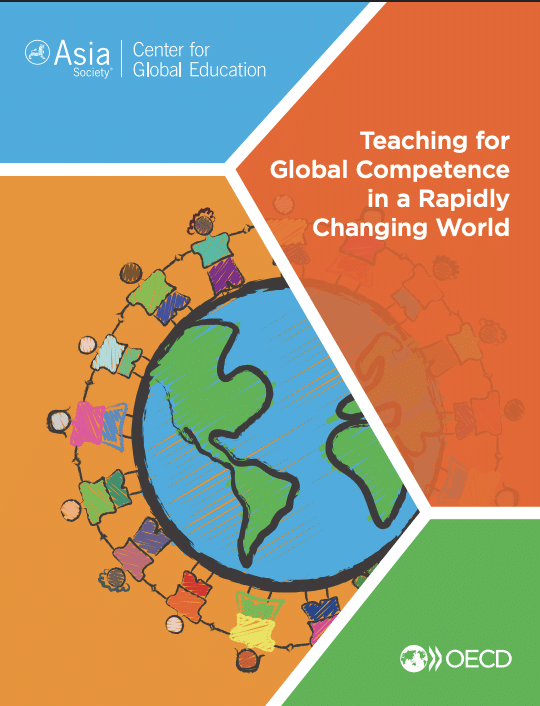
The Asia Society’s Global Leadership Performance Outcomes provide a coherent series of objectives from which teachers, administrators and districts can plan and implement learning activities to build global competence across their four skill areas: Investigate the World, Recognize Perspectives, Communicate Ideas and Take Action.
The toolkit available at Primary Source’s website provides support and pathways for globalizing a school across what they call four domains of action: curriculum, institutional practices, professional development and school culture.
The PISA Global Competence Questionnaire is one part of the 2018 Global Competence assessment. At the high school level, the questionnaire could be used to identify areas of need for students or school programs based on their own self-assessments.
The PISA also has an assessment frameworkĀ for Learning in the Digital World, another aspect of global competency.
The 17 United Nations Sustainable Development Goals are one way to incorporate a global focus into any classroom.Ā
The Pulitzer Center has a number of programs and resources for K-12 teachers and students, including fellowship opportunities, lesson plans, journalist classroom visits and more.
Digital Promise has compiled a list of different technology tools for global education. Ranging from ways to communicate with classrooms in other countries to games, this list is a good introduction to some of theĀ
National Geographic Education offers a variety of materials for educators, including lesson plans, MapMaker, the Explorer Mindset Framework andĀ Explorer Classroom, a way to engage live with National Geographic Explorers from around the world.
Formerly Out of Eden Learn, The Open Canopy offers curriculum resources for observation, connection, storytelling and sharing. The Open Canopy is an initiative of Project Zero based on the Out of Eden walk being completed by journalist Paul Salopek.
Exploring By the Seat of Your Pants offers live lessons with scientists, conservationists, storytellers and explorers from around the world. Also on their site are story maps about several issues relevant to global education.
ArcGIS Story Maps are a great digital tool for older students that combines maps, storytelling and student voice.Ā
Adobe Express is a tool for studentsĀ and teachers alike to use when creating videos, posters, presentations and more. Teachers can create classrooms and assignments in Adobe Express that integrate with Google Classroom.Ā
Common Sense Education offers digital literacy lesson plans for K-8 students. Topics covered include digital footprints, online communities, pen pals, media and emotions, cyberbullying and more.
This website is not an official U.S. Department of State website. The views and information presented are the participantās own and do not represent the Fulbright Teachers for Global Classrooms Program, the U.S. Department of State, or IREX.